Why AutoGPT Forgets Goals
Why AutoGPT Forgets Goals
Learn how context selection, task state, and repeated tool calls can cause AutoGPT goal drift—and how checkpoints and persistent memory can help.
EverMind研究人员
About 5 minutes to read

Key Takeaways
• An AutoGPT agent can lose track of its objective when the active prompt, task state, or completion checks no longer reflect the original goal.
• AutoGPT Classic and the current AutoGPT Platform differ; do not assume every version lacks persistent storage or uses the same reasoning loop.
• A durable task record, explicit completion criteria, and loop detection help keep long-running work aligned with its objective.
• EverOS can supply persistent context to an integrated agent, but memory retrieval alone does not guarantee correct planning or prevent loops.
Why does AutoGPT forget its original goal?
AutoGPT can drift from a goal when the information used for the next action no longer captures the objective, constraints, or current task status. The cause depends on the version and workflow. The current AutoGPT Platform supports designed workflows and managed execution; it should not be described as a universally stateless rolling-chat agent.
In a typical tool-using agent loop, the system plans an action, calls a tool, observes the result, and updates its task state. Exact implementations differ. AutoGPT’s Classic component documentation is separate from its current workflow platform. A model’s context window still limits the instructions and observations included in each request, so verbose tool output can crowd out useful information if context is poorly assembled.
Losing the objective from the active prompt is one possible source of drift, not the only one. Ambiguous success criteria, stale checkpoints, and failed tools can also make an agent repeat work or choose the wrong next step.
What happens when the goal is evicted?
If the next model request lacks the goal or a current task summary, the planner may favor recent observations over the intended outcome. Persisting the goal helps only if the runtime reloads it and checks proposed actions against it.
How does AI agent context decay affect long tasks?
As tool outputs and intermediate notes accumulate, important instructions can become harder to retrieve or prioritize. Keep the objective and constraints in an explicit task record, and include a compact version in each planning step. A memory layer such as EverOS can preserve supporting context, while the runtime maintains authoritative task state.

How does the context window limit cause command loops?
Context limits can contribute to repeated actions, but they do not explain every command loop. An agent may also repeat a tool call because it has not recorded completion, has misread an error, or cannot distinguish a retryable failure from a permanent one.
Consider an email-summary workflow: if the agent reads the same message repeatedly without marking it processed, the next iteration may select it again. This is an illustrative failure pattern, not a claim about a reproduced AutoGPT issue.
Nested subtasks create a similar risk when parent and child states are inconsistent. A completed subtask may be scheduled again, or its parent may never advance. Record status transitions explicitly and check dependencies before selecting another action.
How can a nested task list reduce repeated work?
A nested task list can record the original goal, dependencies, completion status, and remaining work outside the model’s prompt. It reduces repeated work only when the agent reads and updates it consistently; the list itself is not a guarantee against loops.
How does persistent memory architecture solve the problem?
Persistent memory can preserve earlier decisions and useful execution history across sessions. Combine it with a durable task checkpoint, a clearly scoped current objective, and a stop condition. The planner must still retrieve the relevant memory and decide whether the proposed action advances the task.
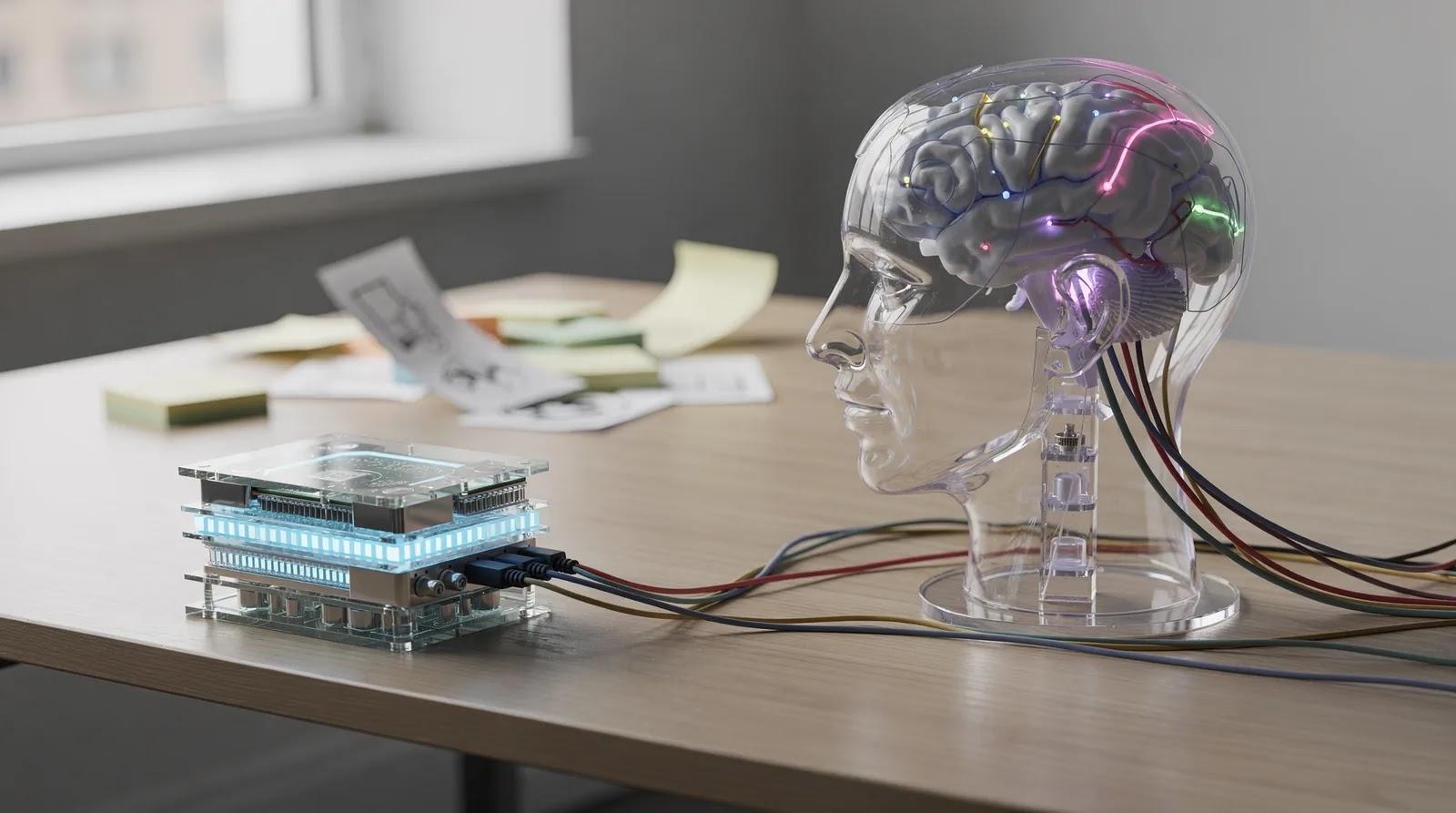
What persistent memory architecture fixes goal retention?
Move the goal, constraints, and task status into durable storage, then reload them at each planning step and after a restart. Persisting a goal is only the first part: the runtime must also compare actions with that goal and record completed work.
EverMind’s memory runtime, EverOS, stores Markdown-backed user and agent memory with synchronized SQLite and LanceDB indexes. Its architecture guide separates episodes and profiles from cases and reusable skills. Connecting such a memory backend to an AutoGPT workflow requires application integration; it is not evidence of a built-in AutoGPT connector.
How can EverOS support longer-running agent workflows?
EverOS can retain interactions and execution trajectories for later retrieval. Configured background strategies can derive cases and skills from suitable runs. The agent still needs explicit goal selection, task-state updates, and completion checks; memory infrastructure does not replace those controls.
What results does the architecture achieve?
Our published benchmark table reports 94.42% micro accuracy on LoCoMo under a documented model configuration. That conversational-memory result does not measure AutoGPT planning, loop avoidance, or weeks-long goal retention. Test those behaviors separately with your workflow, tool failures, restarts, and completion criteria.
FAQ
Why does AutoGPT lose track of its original goal?
Possible causes include missing or poorly prioritized goal instructions, stale task state, ambiguous success criteria, and context selection. Inspect the actual AutoGPT version and execution logs rather than assuming a fixed context-window mechanism.
Why do command loops happen during long tasks?
Loops can occur when a tool failure is retried without a limit, completed work is not recorded, or the next action is chosen from stale context. Add retry limits, progress checks, and explicit completion status alongside memory retrieval.
How does persistent memory prevent goal drift?
Persistent memory can restore earlier decisions and relevant history after a restart, but it cannot prevent goal drift on its own. Combine it with a durable objective, checkpoints, and a planner that checks each proposed action against the task’s success criteria.
Conclusion
Long-running agents need both durable context and reliable execution controls. Preserve goals and decisions, reload the relevant state, track completed work, and stop retries that are not producing progress. A memory backend can support that design, while planning and checkpoint logic remain responsible for keeping the workflow on course.
Key Takeaways
• An AutoGPT agent can lose track of its objective when the active prompt, task state, or completion checks no longer reflect the original goal.
• AutoGPT Classic and the current AutoGPT Platform differ; do not assume every version lacks persistent storage or uses the same reasoning loop.
• A durable task record, explicit completion criteria, and loop detection help keep long-running work aligned with its objective.
• EverOS can supply persistent context to an integrated agent, but memory retrieval alone does not guarantee correct planning or prevent loops.
Why does AutoGPT forget its original goal?
AutoGPT can drift from a goal when the information used for the next action no longer captures the objective, constraints, or current task status. The cause depends on the version and workflow. The current AutoGPT Platform supports designed workflows and managed execution; it should not be described as a universally stateless rolling-chat agent.
In a typical tool-using agent loop, the system plans an action, calls a tool, observes the result, and updates its task state. Exact implementations differ. AutoGPT’s Classic component documentation is separate from its current workflow platform. A model’s context window still limits the instructions and observations included in each request, so verbose tool output can crowd out useful information if context is poorly assembled.
Losing the objective from the active prompt is one possible source of drift, not the only one. Ambiguous success criteria, stale checkpoints, and failed tools can also make an agent repeat work or choose the wrong next step.
What happens when the goal is evicted?
If the next model request lacks the goal or a current task summary, the planner may favor recent observations over the intended outcome. Persisting the goal helps only if the runtime reloads it and checks proposed actions against it.
How does AI agent context decay affect long tasks?
As tool outputs and intermediate notes accumulate, important instructions can become harder to retrieve or prioritize. Keep the objective and constraints in an explicit task record, and include a compact version in each planning step. A memory layer such as EverOS can preserve supporting context, while the runtime maintains authoritative task state.
How does the context window limit cause command loops?
Context limits can contribute to repeated actions, but they do not explain every command loop. An agent may also repeat a tool call because it has not recorded completion, has misread an error, or cannot distinguish a retryable failure from a permanent one.
Consider an email-summary workflow: if the agent reads the same message repeatedly without marking it processed, the next iteration may select it again. This is an illustrative failure pattern, not a claim about a reproduced AutoGPT issue.
Nested subtasks create a similar risk when parent and child states are inconsistent. A completed subtask may be scheduled again, or its parent may never advance. Record status transitions explicitly and check dependencies before selecting another action.
How can a nested task list reduce repeated work?
A nested task list can record the original goal, dependencies, completion status, and remaining work outside the model’s prompt. It reduces repeated work only when the agent reads and updates it consistently; the list itself is not a guarantee against loops.
How does persistent memory architecture solve the problem?
Persistent memory can preserve earlier decisions and useful execution history across sessions. Combine it with a durable task checkpoint, a clearly scoped current objective, and a stop condition. The planner must still retrieve the relevant memory and decide whether the proposed action advances the task.
What persistent memory architecture fixes goal retention?
Move the goal, constraints, and task status into durable storage, then reload them at each planning step and after a restart. Persisting a goal is only the first part: the runtime must also compare actions with that goal and record completed work.
EverMind’s memory runtime, EverOS, stores Markdown-backed user and agent memory with synchronized SQLite and LanceDB indexes. Its architecture guide separates episodes and profiles from cases and reusable skills. Connecting such a memory backend to an AutoGPT workflow requires application integration; it is not evidence of a built-in AutoGPT connector.
How can EverOS support longer-running agent workflows?
EverOS can retain interactions and execution trajectories for later retrieval. Configured background strategies can derive cases and skills from suitable runs. The agent still needs explicit goal selection, task-state updates, and completion checks; memory infrastructure does not replace those controls.
What results does the architecture achieve?
Our published benchmark table reports 94.42% micro accuracy on LoCoMo under a documented model configuration. That conversational-memory result does not measure AutoGPT planning, loop avoidance, or weeks-long goal retention. Test those behaviors separately with your workflow, tool failures, restarts, and completion criteria.
FAQ
Why does AutoGPT lose track of its original goal?
Possible causes include missing or poorly prioritized goal instructions, stale task state, ambiguous success criteria, and context selection. Inspect the actual AutoGPT version and execution logs rather than assuming a fixed context-window mechanism.
Why do command loops happen during long tasks?
Loops can occur when a tool failure is retried without a limit, completed work is not recorded, or the next action is chosen from stale context. Add retry limits, progress checks, and explicit completion status alongside memory retrieval.
How does persistent memory prevent goal drift?
Persistent memory can restore earlier decisions and relevant history after a restart, but it cannot prevent goal drift on its own. Combine it with a durable objective, checkpoints, and a planner that checks each proposed action against the task’s success criteria.
Conclusion
Long-running agents need both durable context and reliable execution controls. Preserve goals and decisions, reload the relevant state, track completed work, and stop retries that are not producing progress. A memory backend can support that design, while planning and checkpoint logic remain responsible for keeping the workflow on course.
您可能还喜欢这些
相关

Multi-round retrieval: letting the model decide when to stop searching
multi-round retrieval,agentic retrieval,fixed top-k,injection budget,core selection,EverOS,agent memory,LoCoMo,LongMemEval,EverMemBench,SubtleMemory,multi-hop retrieval,retrieval accuracy,prompt token cost

Do public SKILL.md files actually make agents better?
SkillCorpus,SKILL.md,agent skills,skill curation,skill retrieval,LLM agents,SkillsBench,GDPVal,agent harness

CRAFT: learning how to fuse video tokens, not just which to drop
CRAFT,video token compression,vision-language models,video VLM,KV cache,prefill cost,token merging,token pruning,temporal reasoning

Self-evolving agents have a measurement problem
self-evolving agents,agent harness,HarnessBank,credit assignment,LLM agents,agent evaluation,harness optimization,significance testing
Why AutoGPT Forgets Goals
Learn how context selection, task state, and repeated tool calls can cause AutoGPT goal drift—and how checkpoints and persistent memory can help.
EverMind研究人员
About 5 minutes to read