EverOS
EverOS
Self-Evolving / Multimodal / Cross-Agent + Cross-Platform / Cloud + Self-Hosted
Self-Evolving / Multimodal / Cross-Agent + Cross-Platform / Cloud + Self-Hosted
Self-evolving Memory across Agent and Platform
Self-evolving Memory across Agent and Platform
Self-evolving Memory across
Agent and Platform
Claude Code
plugin
OpenClaw
skill
Hermes
compatible
Codex
compatible
MCP
server
OpenAI SDK
compatible
Anthropic SDK
compatible
LIMITED TIME OFFER
EverOS Pro users get 3X usage for 6 months.
EverOS Pro users get 3X usage for 6 months.
94.74%
94.74%
High Accuracy
High Accuracy
LoCoMo benchmark
LoCoMo benchmark
<500ms
<500ms
Low Latency
p95 query time
>90%
>90%
Save Token Usage
Save Token Usage
Proprietary model
5+
5+
Paper Published
Paper Published
Peer-reviewed research
HOW IT WORKS
Three steps. Gets your agent smarter over time.
Three steps. Gets your agent
smarter over time.
No new infrastructure to manage. Drop EverOS into your existing agent loop.
Add Memories
One call stores messages, images, and docs. EverOS auto-extracts and tags each memory — Profile, Episodic, or Skill — with no manual curation.
Self-evolve
Retrieve

Add Memories
Self-evolve
Retrieve
Add Memories
One call stores messages, images, and docs. EverOS auto-extracts and tags each memory — Profile, Episodic, or Skill — with no manual curation.
Self-evolve
Retrieve
WHAT YOUR AGENTS ACTUALLY GET
Every capability your agents need, in one place.
Persistent memory, multimodal ingestion, self-evolving skills, <500ms retrieval.
ONLY ON EVEROS
Self-Evolving Skills
Production agents need procedural memory — not just what happened, but how things should be done. Every task your agent completes is captured as a Case. Repeated wins self-promote into reusable Skills, shared across your entire agent team. No manual curation. No brittle hardcoding.
Agent
Online execution
Case
Execution trajectories
Distillation
Offline consolidation
Skill Memories
Skill Self-Evolution
ECOSYSTEM
Drops into your existing agent stack.
Compatible with Claude Code, Codex, OpenClaw, Hermes and MCPs. Your agents get persistent memory without changing how they work.
Claude Code
Codex
OpenClaw
Hermes
MCP
PORTABILITY
Your data, in Markdown, anywhere.
All memories export as clean Markdown — readable, version-controllable, never locked in. Start on EverOS Cloud, move to self-hosted any time. Apache 2.0.
Markdown-first
Cloud
Self-hosted
PERFORMANCE
Fast retrieval, high accuracy, low cost.
93%+ retrieval accuracy, <500ms p95 latency, and ~10× lower cost. EverOS mRAG delivers all three - precise memory at inference speed, without loading your entire context window.
93%+ accuracy
<500ms p95
~10x lower cost
mRAG
MULTIMODAL
Multimodal in one call.
One call ingests PDFs, images, docs, excels, slides and URLs. EverOS parses, chunks, and indexes them as memory your agents can retrieve at inference time. No extra pipelines.
Images
Markdown
Excels
Docs
URLs
Slides
PERFORMANCE
Fast retrieval, high accuracy, low cost.
93%+ retrieval accuracy, <500ms p95 latency, and ~10× lower cost. EverOS mRAG delivers all three - precise memory at inference speed, without loading your entire context window.
93%+ accuracy
<500ms p95
~10x lower cost
mRAG
ONLY ON EVEROS
Self-Evolving Skills
Production agents need procedural memory — not just what happened, but how things should be done. Every task your agent completes is captured as a Case. Repeated wins self-promote into reusable Skills, shared across your entire agent team. No manual curation. No brittle hardcoding.
Agent
Online execution
Case
Execution trajectories
Distillation
Offline consolidation
Skill Memories
Skill Self-Evolution
ECOSYSTEM
Drops into your existing agent stack.
Compatible with Claude Code, Codex, OpenClaw, Hermes and MCPs. Your agents get persistent memory without changing how they work.
Claude Code
Codex
OpenClaw
Hermes
MCP
PORTABILITY
Your data, in Markdown, anywhere.
All memories export as clean Markdown — readable, version-controllable, never locked in. Start on EverOS Cloud, move to self-hosted any time. Apache 2.0.
Markdown-first
Cloud
Self-hosted
MULTIMODAL
Multimodal in one call.
One call ingests PDFs, images, docs, excels, slides and URLs. EverOS parses, chunks, and indexes them as memory your agents can retrieve at inference time. No extra pipelines.
Images
Markdown
Excels
Docs
URLs
Slides
ONLY ON EVEROS
Self-Evolving Skills
Production agents need procedural memory — not just what happened, but how things should be done. Every task your agent completes is captured as a Case. Repeated wins self-promote into reusable Skills, shared across your entire agent team. No manual curation. No brittle hardcoding.
Agent
Online execution
Case
Execution trajectories
Distillation
Offline consolidation
Skill Memories
Skill Self-Evolution
ECOSYSTEM
Drops into your existing agent stack.
Compatible with Claude Code, Codex, OpenClaw, Hermes and MCPs. Your agents get persistent memory without changing how they work.
Claude Code
Codex
OpenClaw
Hermes
MCP
PORTABILITY
Your data, in Markdown, anywhere.
All memories export as clean Markdown — readable, version-controllable, never locked in. Start on EverOS Cloud, move to self-hosted any time. Apache 2.0.
Markdown-first
Cloud
Self-hosted
MULTIMODAL
Multimodal in one call.
One call ingests PDFs, images, docs, excels, slidesand URLs. EverOS parses, chunks, and indexes them as memory your agents can retrieve at inference time. No extra pipelines.
Images
Markdown
Excels
Docs
URLs
PERFORMANCE
Fast retrieval, high accuracy, low cost.
93%+ retrieval accuracy, <500ms p95 latency, and ~10× lower cost. EverOS mRAG delivers all three - precise memory at inference speed, without loading your entire context window.
93%+ accuracy
<500ms p95
~10x lower cost
mRAG
BENCHMARKS
Numbers that back it up.
Numbers that
back it up.
Open source. Reproducible. Independently verified.
94.74% accuracy on LoCoMo
10× lower token cost with proprietary model
Self-Evolving Skills: only on EverOS
Capability
EverOS
Naive RAG
Full Context Windown
Other Memory Infra
Long-term Memory Accuracy
Long-term Memory
Accuracy
94.74%
~45%
N/A (context limit)
~70%
Retrieval Latency (p95)
Retrieval Latency (p95)
<500ms
100–500ms
0ms (no retrieval)
800–3000ms
Token Efficiency
Token Efficiency
~7 - 15× lower
~3× lower
Baseline
~4× lower
Self-Evolving Skills
Self-Evolving Skills
Multimodal Support
Multimodal Support
Varies
Via context
Partial
Open Source
Open Source
Apache 2.0
Varies
N/A
Proprietary
Capability
EverOS
Naive RAG
Full Context Windown
Other Memory Infra
Long-term Memory Accuracy
94.74%
~45%
N/A (context limit)
~70%
Retrieval Latency (p95)
<500ms
100–500ms
0ms (no retrieval)
800–3000ms
Token Efficiency
~7 - 15× lower
~3× lower
Baseline
~4× lower
Self-Evolving Skills
Multimodal Support
Varies
Via context
Partial
Open Source
Apache 2.0
Varies
N/A
Proprietary
USE CASES
Real problems
EverOS actually solves.
Explore what's possible with EverOS
Public Value
Reunite - Find with EverOS
Parents describe what they remember. Children describe what they recall. Reunite uses semantic memory to surface the connections.

AI Wearables
AI Wearable with Memory
A context-native AI wearable that listens to everyday life and converts conversations into memory.

AI Wearables
Rokid AI Assistant with EverOS
Connect to EverOS within Rokid Glasses enabling long-term memory for all of your smart activities.

Productivity Tool
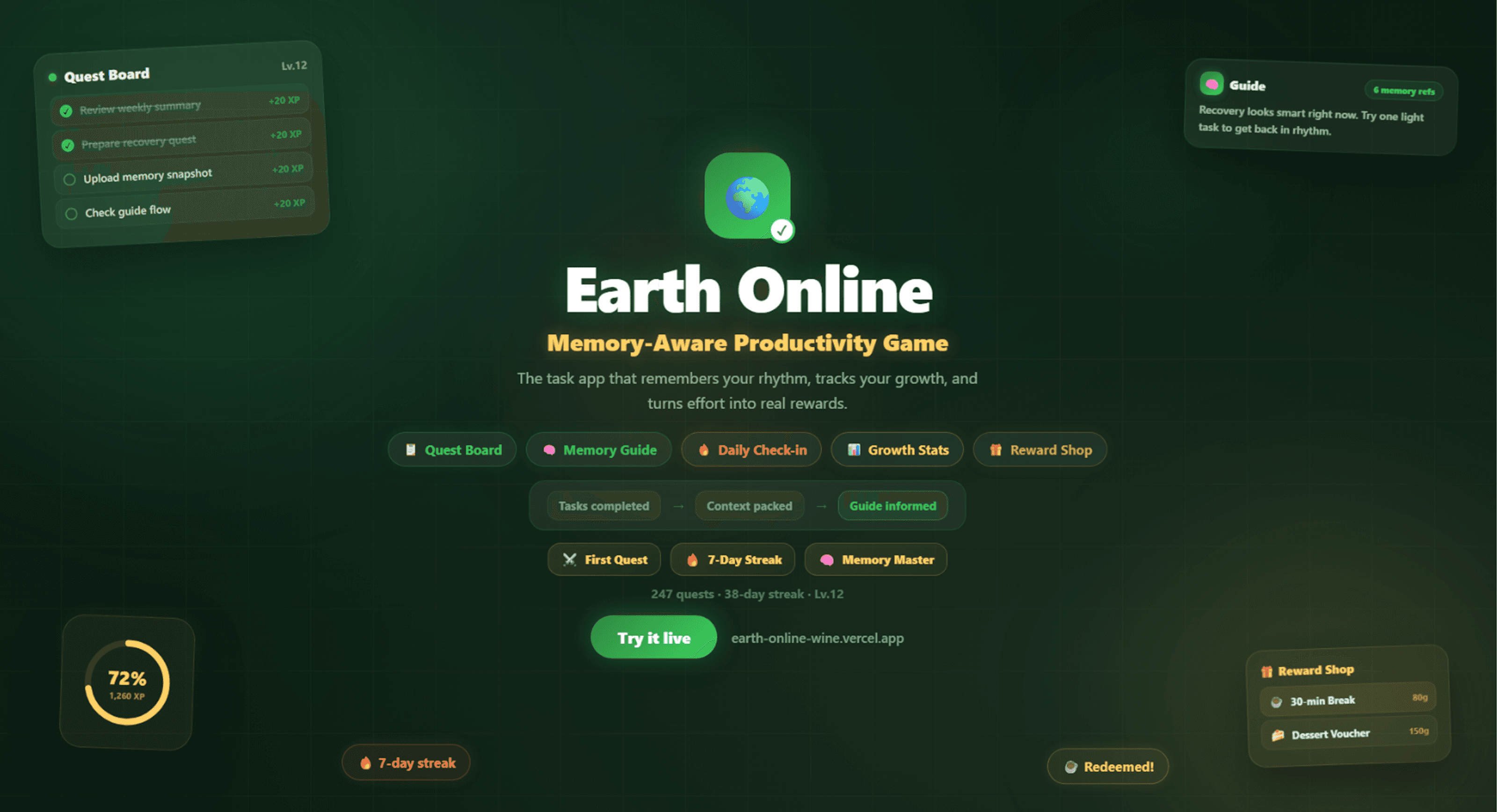
Earth Online Memory Game
Earth Online is a memory-aware productivity game that turns everyday planning into a living quest log.
Multi-Agent Orchestration
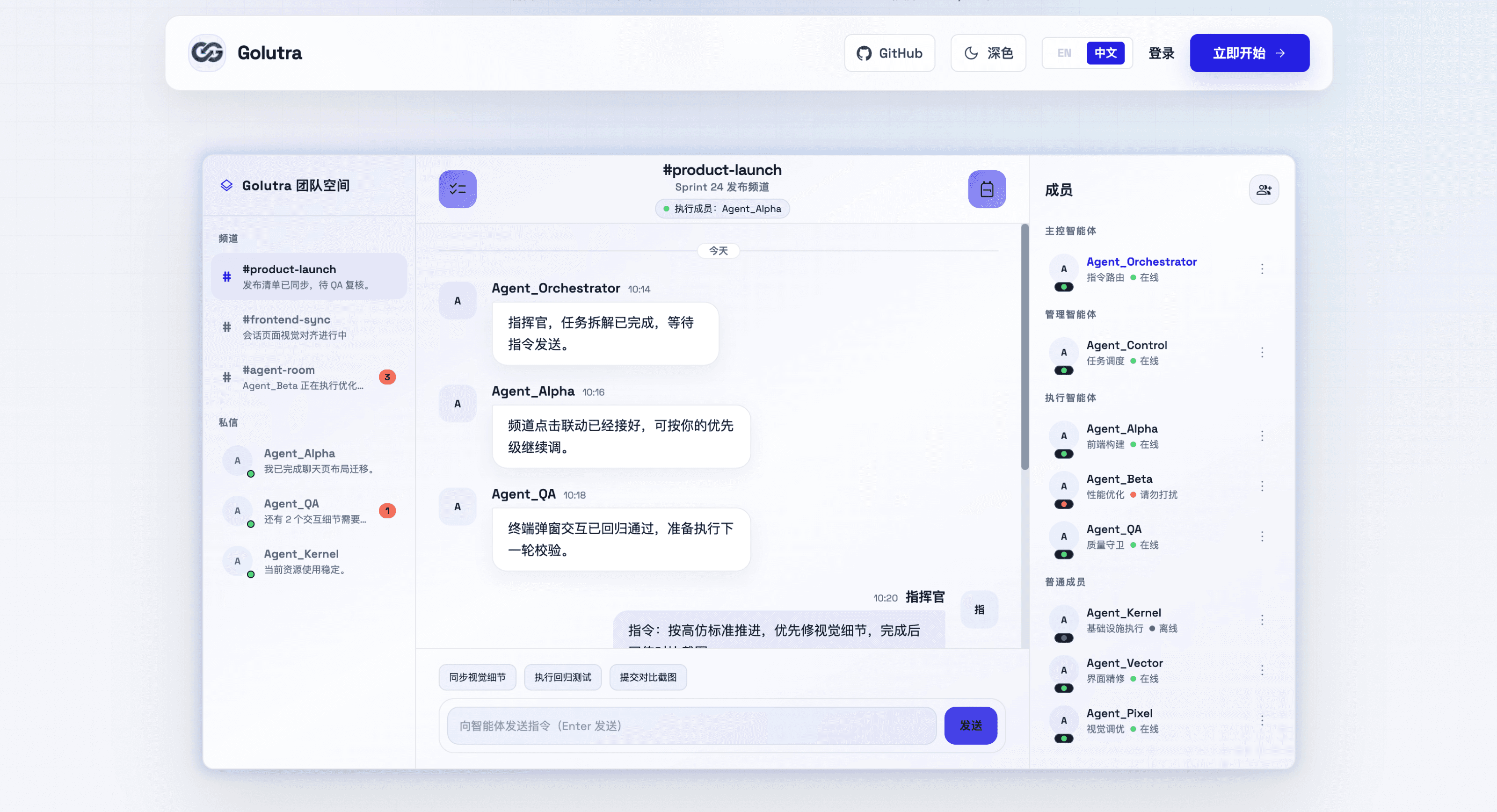
Multi-Agent Orchestration Platform
Golutra presents a multi-agent workforce for engineering teams, extending the IDE model from a single assistant to coordinated agents.
Healthcare Agent
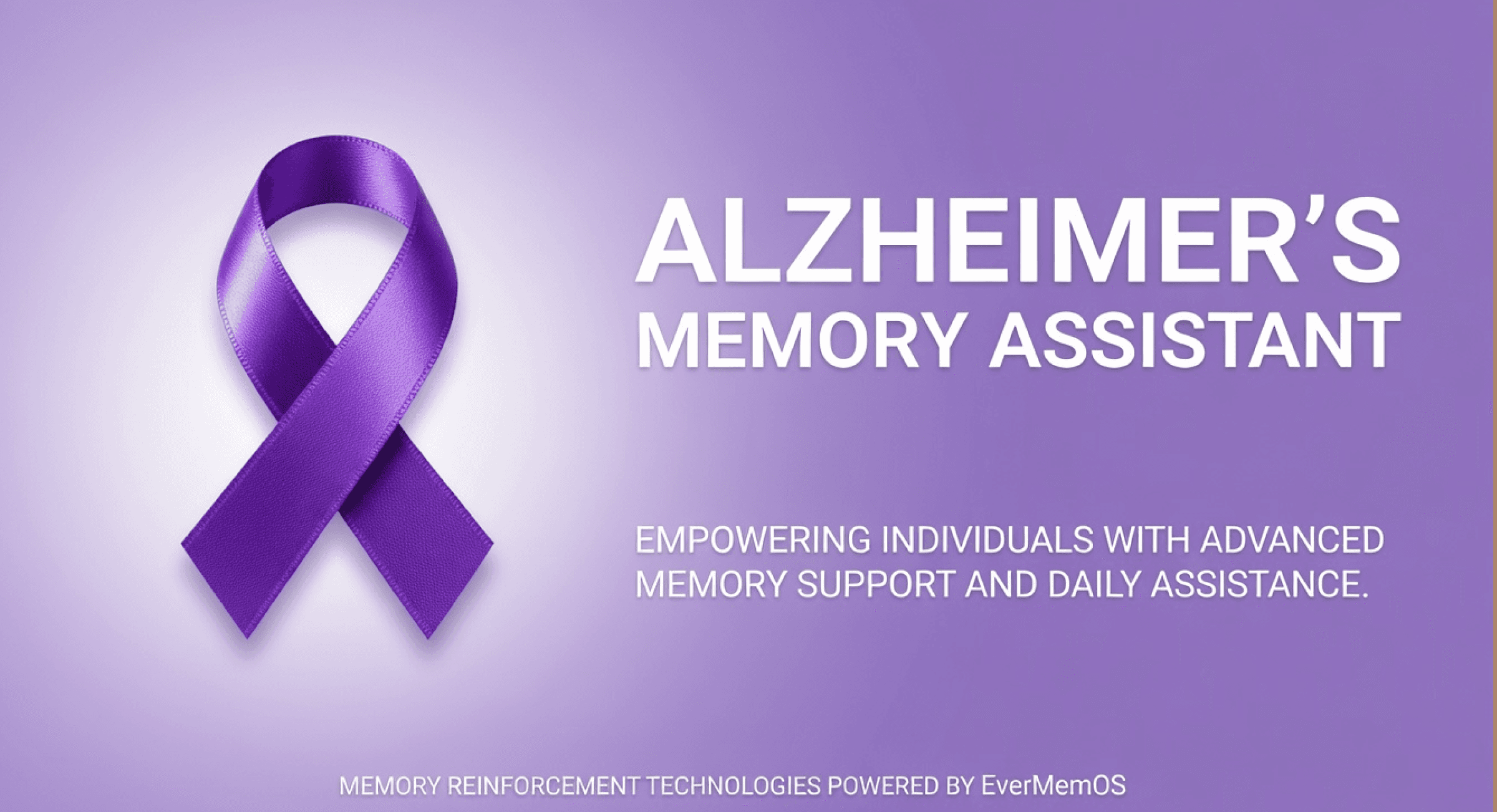
Alzheimer’s Memory Assistant
Empowering individuals with advanced memory support and daily assistance.
Coding Agent
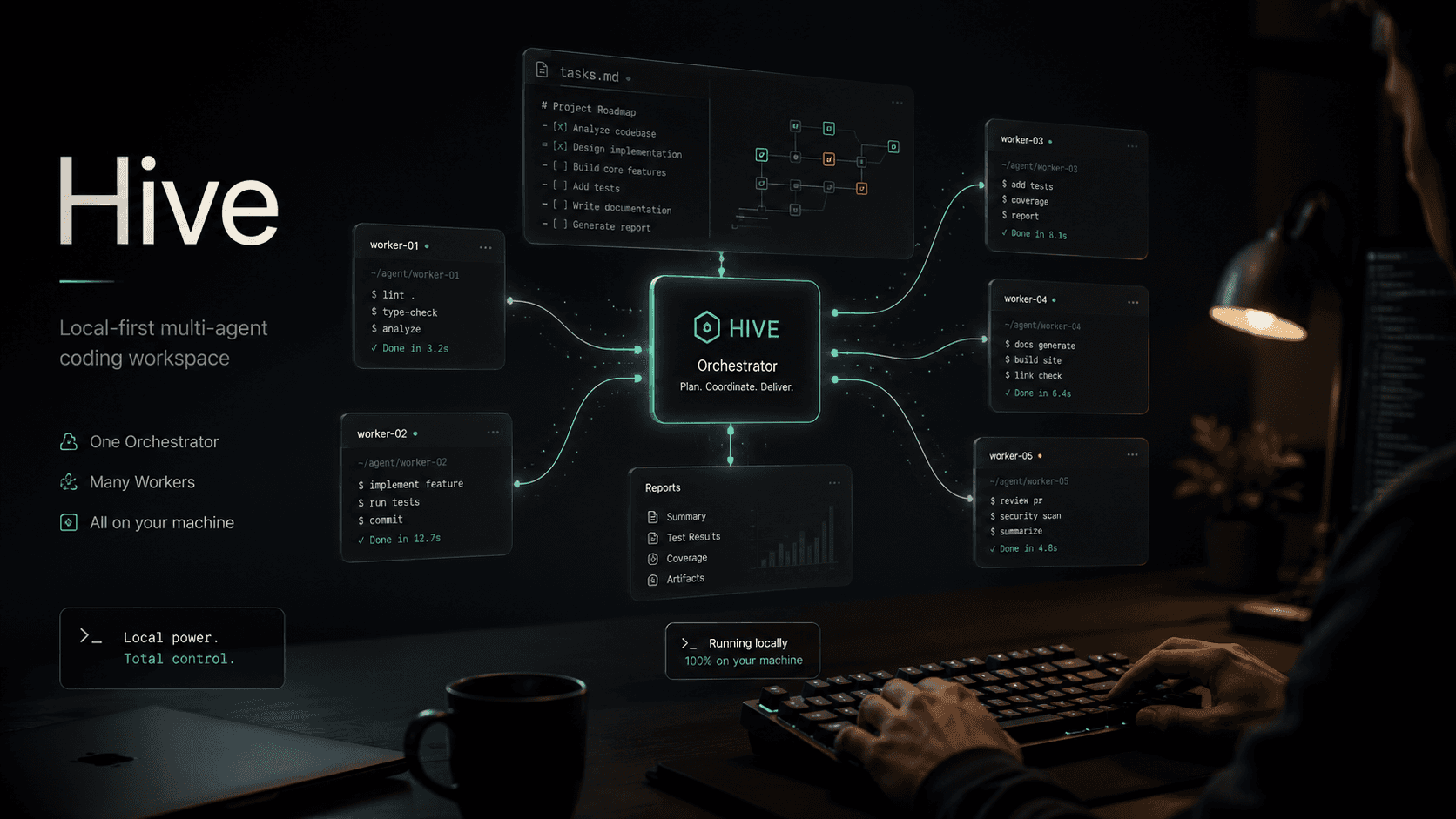
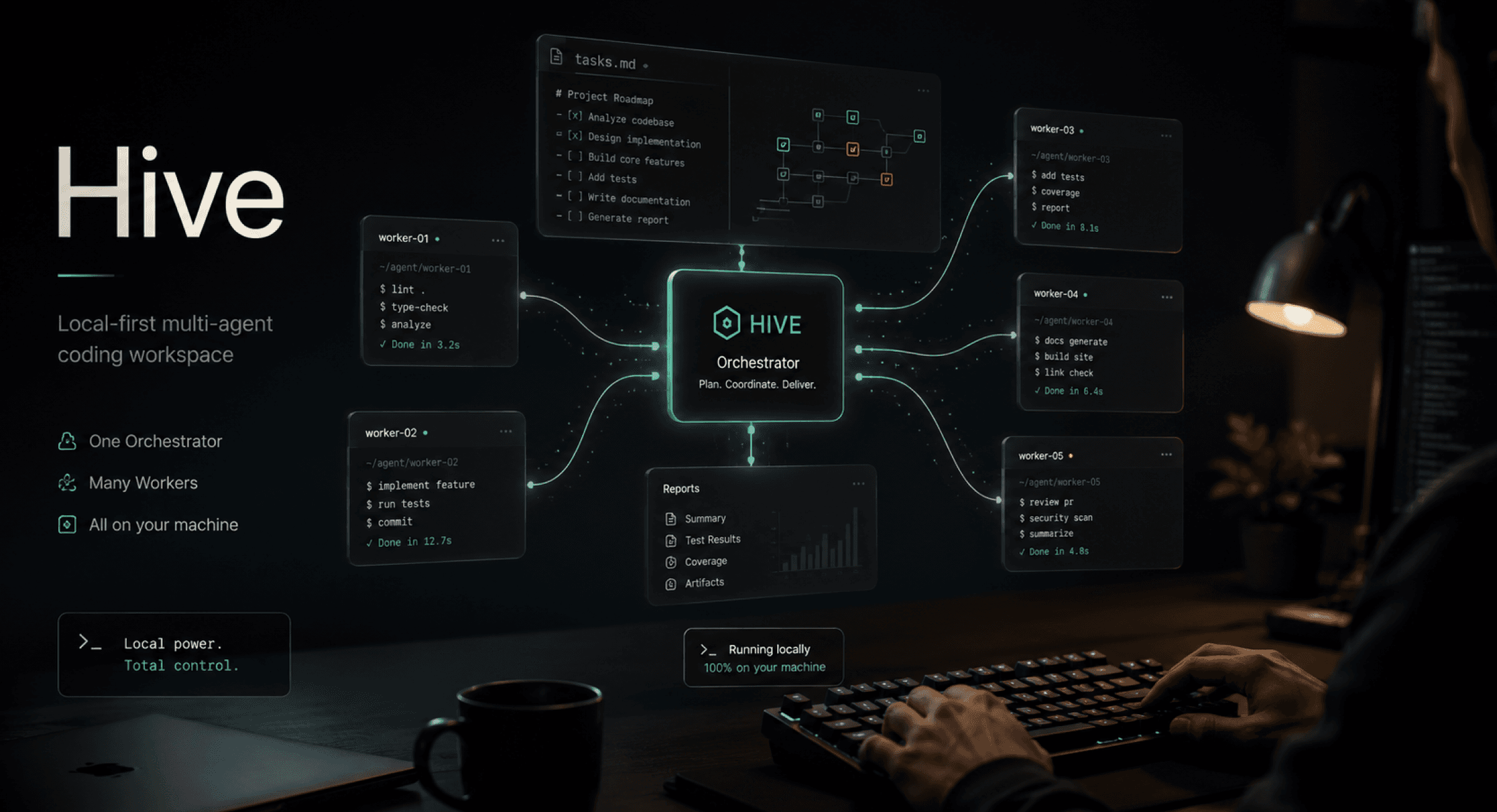
Hive Orchestrator
Browser-native hive-mind for CLI coding agents — Claude Code, Codex, Gemini, and OpenCode collaborate as real PTY processes via a team protocol.
Public Value
Reunite - Find with EverOS
Parents describe what they remember. Children describe what they recall. Reunite uses semantic memory to surface the connections.
AI Wearables
AI Wearable with Memory
A context-native AI wearable that listens to everyday life and converts conversations into memory.
AI Wearables
Rokid AI Assistant with EverOS
Connect to EverOS within Rokid Glasses enabling long-term memory for all of your smart activities.
Productivity Tool
Earth Online Memory Game
Earth Online is a memory-aware productivity game that turns everyday planning into a living quest log.
Multi-Agent Orchestration
Multi-Agent Orchestration Platform
Golutra presents a multi-agent workforce for engineering teams, extending the IDE model from a single assistant to coordinated agents.
Healthcare Agent
Alzheimer’s Memory Assistant
Empowering individuals with advanced memory support and daily assistance.
Coding Agent
Hive Orchestrator
Browser-native hive-mind for CLI coding agents — Claude Code, Codex, Gemini, and OpenCode collaborate as real PTY processes via a team protocol.
Public Value
Reunite - Find with EverOS
Parents describe what they remember. Children describe what they recall. Reunite uses semantic memory to surface the connections.
AI Wearables
AI Wearable with Memory
A context-native AI wearable that listens to everyday life and converts conversations into memory.
AI Wearables
Rokid AI Assistant with EverOS
Connect to EverOS within Rokid Glasses enabling long-term memory for all of your smart activities.
Productivity Tool
Earth Online Memory Game
Earth Online is a memory-aware productivity game that turns everyday planning into a living quest log.
Multi-Agent Orchestration
Multi-Agent Orchestration Platform
Golutra presents a multi-agent workforce for engineering teams, extending the IDE model from a single assistant to coordinated agents.
Healthcare Agent
Alzheimer’s Memory Assistant
Empowering individuals with advanced memory support and daily assistance.
Coding Agent
Hive Orchestrator
Browser-native hive-mind for CLI coding agents — Claude Code, Codex, Gemini, and OpenCode collaborate as real PTY processes via a team protocol.
USE CASES
USE CASES
Real problems
EverOS actually solves.
Real problems
EverOS actually solves.
Explore what's possible with EverOS
Explore what's possible with EverOS
- "
Public Value
Reunite - Find with EverOS
Parents describe what they remember. Children describe what they recall. Reunite uses semantic memory to surface the connections.
- "
AI Wearables
Rokid AI Assistant with EverOS
Connect to EverOS within Rokid Glasses enabling long-term memory for all of your smart activities.
- "
AI Wearables
AI Wearable with Memory
A context-native AI wearable that listens to everyday life and converts conversations into memory.
- "
Productivity Tool
Earth Online Memory Game
Earth Online is a memory-aware productivity game that turns everyday planning into a living quest log.
- "
Multi-Agent Orchestration
Multi-Agent Orchestration Platform
Golutra presents a multi-agent workforce for engineering teams, extending the IDE model from a single assistant to coordinated agents.
- "
Healthcare Agent
Alzheimer’s Memory Assistant
Empowering individuals with advanced memory support and daily assistance.
- "
Coding Agent
Hive Orchestrator
Browser-native hive-mind for CLI coding agents — Claude Code, Codex, Gemini, and OpenCode collaborate as real PTY processes via a team protocol.
Public Value
Reunite - Find with EverOS
Parents describe what they remember. Children describe what they recall. Reunite uses semantic memory to surface the connections.
AI Wearables
Rokid AI Assistant with EverOS
Connect to EverOS within Rokid Glasses enabling long-term memory for all of your smart activities.
AI Wearables
AI Wearable with Memory
A context-native AI wearable that listens to everyday life and converts conversations into memory.
Productivity Tool
Earth Online Memory Game
Earth Online is a memory-aware productivity game that turns everyday planning into a living quest log.
Multi-Agent Orchestration
Multi-Agent Orchestration Platform
Golutra presents a multi-agent workforce for engineering teams, extending the IDE model from a single assistant to coordinated agents.
Healthcare Agent
Alzheimer’s Memory Assistant
Empowering individuals with advanced memory support and daily assistance.
Coding Agent
Hive Orchestrator
Browser-native hive-mind for CLI coding agents — Claude Code, Codex, Gemini, and OpenCode collaborate as real PTY processes via a team protocol.
DEPLOY YOUR WAY
Cloud or self-hosted. No lock-in.
Same SDK. Same retrieval engine. Same memory format.
Fully compatible — develop locally, ship to cloud, or run both in parallel — switch endpoints, not code.
Same SDK. Same retrieval engine. Same memory format. Fully compatible — develop locally, ship to cloud, or run both in parallel — switch endpoints, not code.
EverOS Cloud
Recommended · zero ops
Fully managed. Production-ready from day one. We handle infrastructure, scaling, and uptime — you stay focused on building.
Up and running in under 5 minutes
Automatic scaling with your usage
Full data export any time, in Markdown
Enterprise support available
Self-hosted
Open source · Apache 2.0
Step 01
Clone the repo
Step 02
Start Docker services
Step 03
Verify service status
Step 04
Install uv
Step 05
Install dependencies
Step 06
Configure environment Variable
EverOS Cloud
Recommended · zero ops
Fully managed. Production-ready from day one. We handle infrastructure, scaling, and uptime — you stay focused on building.
Up and running in under 5 minutes
Automatic scaling with your usage
Full data export any time, in Markdown
Enterprise support available
Self-hosted
Open source · Apache 2.0
Run the full memory stack on your own infra. Every layer inspectable. Data never leaves your environment. Identical API to cloud — switch any time.
EverOS Cloud
Recommended · zero ops
Fully managed. Production-ready from day one. We handle infrastructure, scaling, and uptime — you stay focused on building.
Up and running in under 5 minutes
Automatic scaling with your usage
Full data export any time, in Markdown
Enterprise support available
Self-hosted
Open source · Apache 2.0
Step 01
Clone the repo
Step 02
Start Docker services
Step 03
Verify service status
Step 04
Install uv
Step 05
Install dependencies
Step 06
Configure environment Variable
PRICING
Start free. Scale when you're ready.
No credit card required. Full API access on every plan.
No credit card required.
Full API access on every plan.
SELF-HOSTED
Community
Self-hosted
Your infra. Full control
Self-host & run locally
Unlimited Memory Spaces
Unlimited MCU - your compute, your scale
Full source code - every layer inspectable
Apache 2.0 - fork, modify, ship
Community support via Discord & GitHub
CLOUD
Free
Self-hosted
Your infra. Full control
Get started free
3 Memory Spaces
50,000 MCU / month
100,000 Retrieval API Calls / month
Community support
Community support
EARAL ACCESS
CLOUD
Pro
FREE DURING BETA
$25 / month
Higher limits, top up anytime
Subscribe
8 Memory Spaces
250,000 MCU / month
500,000 Retrieval API Calls / month
Top-up packs available
Self-Evolving Skills enabled
Priority email support
CLOUD
Enterprise
Custom
Custom limits, private deploy
Contact us
Custom Memory Spaces
Custom MCU quota
Custom Retrieval API Calls
Dedicated account manager
Private deployment option
SELF-HOSTED
Community
Self-hosted
Your infra. Full control
Self-host & run locally
Unlimited Memory Spaces
Unlimited MCU - your compute, your scale
Full source code - every layer inspectable
Apache 2.0 - fork, modify, ship
Community support via Discord & GitHub
CLOUD
Free
Self-hosted
Your infra. Full control
Get started free
3 Memory Spaces
50,000 MCU / month
100,000 Retrieval API Calls / month
Community support
Community support
EARLY ACCESS
CLOUD
Pro
FREE DURING BETA
$25 / month
Higher limits, top up anytime
Subscribe
8 Memory Spaces
250,000 MCU / month
500,000 Retrieval API Calls / month
Top-up packs available
Self-Evolving Skills enabled
Priority email support
CLOUD
Enterprise
Custom
Custom limits, private deploy
Contact us
Custom Memory Spaces
Custom MCU quota
Custom Retrieval API Calls
Dedicated account manager
Private deployment option
SELF-HOSTED
Community
Self-hosted
Your infra. Full control
Self-host & run locally
Unlimited Memory Spaces
Unlimited MCU - your compute, your scale
Full source code - every layer inspectable
Apache 2.0 - fork, modify, ship
Community support via Discord & GitHub
CLOUD
Free
Self-hosted
Your infra. Full control
Get started free
3 Memory Spaces
50,000 MCU / month
100,000 Retrieval API Calls / month
Community support
Community support
EARLY ACCESS
CLOUD
Pro
FREE DURING BETA
$25 / month
Higher limits, top up anytime
Subscribe
8 Memory Spaces
250,000 MCU / month
500,000 Retrieval API Calls / month
Top-up packs available
Self-Evolving Skills enabled
Priority email support
CLOUD
Enterprise
Custom
Custom limits, private deploy
Contact us
Custom Memory Spaces
Custom MCU quota
Custom Retrieval API Calls
Dedicated account manager
Private deployment option
GET STARTED TODAY
Give your agents
memory that self-evolves.
Give your agents
memory that self-evolves.
Join thousands of builders shipping smarter agents with EverOS. Free to start, open to inspect, built to scale.
Why Does Memory Management Matter for AI Agents?
When building production-grade AI systems, one of the first things you run into is the memory problem. You can throw everything into a prompt and hope for the best, but that approach breaks down fast. Context windows are expensive, and the more you stuff into them, the more likely the model is to lose track of what actually matters. This is why dedicated agent memory management is not a nice-to-have — it is the foundation of any serious agentic architecture.
A well-designed memory management system allows an intelligent agent to selectively store, retrieve, and reason over information across sessions, users, and time. Instead of treating every conversation as a blank slate, the agent can draw on a rich history of past interactions, learned preferences, and established procedures. This is what transforms a simple LLM into a true cognitive agent — one that gets smarter and more useful the longer you work with it.
The challenge is that raw memory data is not inherently useful. It needs to be structured, indexed, and retrieved with precision. Poor memory retrieval leads to hallucinations, irrelevant context, and degraded user experience. EverOS was built specifically to solve this: to give developers a reliable, scalable memory store that handles the full complexity of agent information management without sacrificing speed or accuracy.
The Four Types of AI Agent Memory: Episodic, Semantic, Procedural, and Profile
Not all memory is the same. One of the most important concepts in building capable memory agents is understanding the distinct roles that different memory types play. Drawing from both cognitive science and practical html AI engineering, we can identify four core types of agent memory that every intelligent system needs.
Episodic memory is the agent's record of specific events and interactions. It answers the question "what happened?" — capturing the history of a conversation, a task, or a user session. Strong episodic memory allows an agent to reference past decisions, avoid repeating mistakes, and maintain continuity across long-running projects.
Semantic memory holds the agent's general knowledge and understanding of the world. It is not tied to a specific event but to facts, concepts, and relationships. When an agent knows that your company uses Python for backend development, or that a particular client prefers formal communication, that knowledge lives in semantic memory. It is the foundation of intelligent, context-aware memory recall.
Procedural memory is about skills and workflows. It is the "how-to" knowledge that allows an agent to execute complex, multi-step tasks reliably. EverOS's Skill Self-Evolution mechanism is a direct implementation of procedural memory — recording successful agent training trajectories and distilling them into reusable patterns.
Finally, profile memory stores long-term identities and preferences, ensuring that every interaction is personalized and consistent. Together, these four types form a complete taxonomy for cognitive memory in AI systems.
| Memory Type | Function | Example Use Case |
|---|---|---|
| Episodic Memory | Tracks interaction history and past events | Recalling a previous support ticket or project decision |
| Semantic Memory | Stores general knowledge and facts | Knowing a user's preferred coding language or brand guidelines |
| Procedural Memory | Masters workflows and repeatable skills | Executing a multi-step deployment pipeline without re-learning each step |
| Profile Memory | Maintains long-term identities and preferences | Personalizing responses based on a user's role and communication style |
How to Choose the Right Agent Memory Architecture
Choosing the right agentic architecture for your memory layer is one of the most consequential decisions you will make when building a production AI system. The wrong choice leads to brittle agents that forget critical context, expose sensitive data, or fail to scale. The right choice gives you stateful, intelligent agents that improve over time.
The first question to ask is: what kind of memory retrieval do you need? If your agents primarily need to search over large volumes of unstructured documents, a vector-based approach using dense retrieval is a strong starting point. But for most real-world applications, you need a hybrid approach — combining dense vector search for semantic memory with sparse keyword matching for precise memory recall of specific facts or identifiers. This is the architecture that powers EverOS's mRAG system.
The second question is about governance and isolation. In a multi-agent or multi-user environment, you need clear rules about who can access what. A robust memory store must support scoping — from global shared knowledge down to session-level private context. Without this, you risk data leakage and inconsistent agent behavior. EverOS's multi-level scope system (global → team → project → group → session) was designed precisely for this challenge.
Finally, consider the memory lifecycle. Memory is not static. It needs to be ingested, consolidated, evolved, and sometimes purged. A system that only handles memory data ingestion but not archival or evolution will accumulate noise over time, degrading the quality of memory agents. EverOS addresses this with its full-lifecycle pipeline: from real-time online memory extraction to asynchronous offline memory evolution and progressive disclosure retrieval.
Whether you are building a customer support agent, a coding assistant, or a complex multi-agent orchestration system, the principles remain the same: structure your memory, govern your access, and build for the full lifecycle. That is how you build intelligent memory that scales.
Claude Code
plugin
OpenClaw
skill
Hermes
compatible
Codex
compatible
MCP
server
OpenAI SDK
compatible
Anthropic SDK
compatible
EverMind
A straightforward solution to long-term coherence
Scan to join the community

Discord


© 2026 EverMind Team.
EverMind
A straightforward solution to long-term coherence
Scan to join the community
Discord
© 2026 EverMind Team.
EverMind
A straightforward solution to long-term coherence
Scan to join the community
Discord
© 2026 EverMind Team.