AI Personal Knowledge Management: AI Solutions for Business Productivity
AI Personal Knowledge Management: AI Solutions for Business Productivity
Traditional note apps store static text that users must manually organize, search, and update. AI personal knowledge systems like EverMind's EverMemOS actively evolve context, remembering interactions across sessions through EverCore infrastructure — turning knowledge management from passive storage into a self-evolving, continuously learning memory layer for agents and workflows.
EverMind研究人员
About 4 minutes to read

Traditional note apps store static text that users must manually organize, search, and update. AI personal knowledge systems like EverMind's EverMemOS actively evolve context, remembering interactions across sessions through EverCore infrastructure. EverSkill auto-improves skills weekly from usage signals, turning knowledge management from passive storage into a self-evolving, continuously learning memory layer for agents and workflows.
Key Takeaways
• PKM effectiveness depends on individual needs; Apple Notes serves adequately for some users' personal systems.
• One PKM system successfully operated for 48 years, demonstrating long-term viability of sustained knowledge management.
• AI enthusiasts recommend avoiding AI for core PKM tasks like synthesis and daily note management.
• PKM tools connect fragmented information across phones, browsers, and screenshots into organized, linked systems.
Why do note apps fall short for AI knowledge?
Traditional note apps store information as isolated files or pages, not as interconnected knowledge that an AI agent can reference across sessions. A personal knowledge management system organizes everything a person learns and collects in one place. Most tools treat each note as a static snapshot. This design creates a fundamental gap when developers try to build [AI Personal Knowledge Management] systems that require durable, evolving context.
What is the core difference between AI PKM vs traditional note apps?
The distinction between AI PKM vs traditional note apps comes down to persistence. Notes are static snapshots frozen at the moment of creation. AI systems maintain durable awareness that can be retrieved and updated later. A large context window provides temporary attention within a session. Long-term memory offers persistent awareness that carries across days and platforms.
How does semantic retrieval note taking change the game?
Semantic retrieval note taking goes beyond keyword matching. Apple Notes and similar tools lack this capability, meaning users can only find what they explicitly labeled or searched by exact keyword. A second brain AI architecture needs to understand meaning, not just text strings. The [EverMemOS memory architecture] treats memory as a lifecycle, consolidating episodes into organized themes rather than dumping raw text into a folder hierarchy. This approach reconstructs the minimally sufficient context for each interaction, enabling coherent behavior at lower token cost versus brute-force context expansion.
Capability | Traditional Note Apps | EverMemOS |
|---|---|---|
Storage model | Isolated files/pages | |
Retrieval method | Keyword search | Semantic + temporal queries |
Persistence | Static snapshots | Durable, evolving awareness |
Context handling | Manual folder hierarchy | Automated theme consolidation |
What makes AI memory different from storing notes?
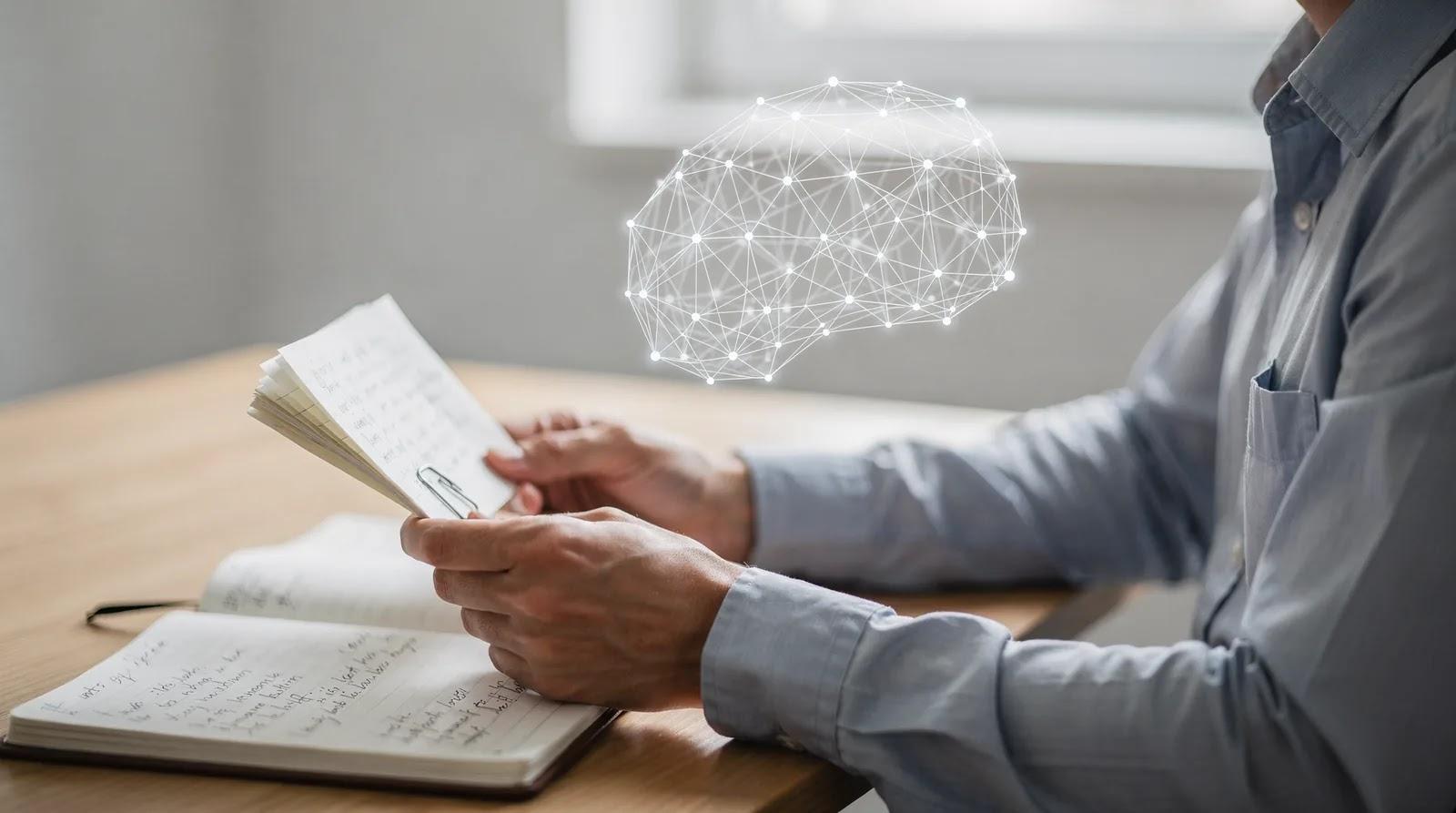
Traditional note apps treat every entry as equal. A grocery list sits beside a strategic plan, both stored as apartment text with no structural hierarchy. AI Personal Knowledge Management systems like EverMemOS fundamentally change this dynamic. The platform uses hierarchical extraction to organize information into stable semantic structures, not apartment lists. This approach moves beyond simple retrieval by consolidating episodes into organized themes and reconstructing the minimally sufficient context for each query.
How does persistent memory AI improve recall accuracy?
Persistent memory AI allows agents to recall preferences, project context, and relationship history across sessions. This capability transforms a basic chatbot into a digital collaborator that remembers past interactions. The difference between AI PKM vs traditional note apps becomes stark when examining benchmark results. EverMemOS achieves benchmark results that apartment-file note systems cannot approach.
What distinguishes episodic from thematic memory?
Feature | Traditional Note Apps | EverMemOS |
|---|---|---|
Memory structure | Apartment lists | Hierarchical semantic layers |
Retrieval method | Keyword search | Context-aware reconstruction |
Temporal awareness | None | Episodic vs thematic distinction |
Token efficiency | High cost per query | Minimally sufficient context |
Second brain AI systems distinguish episodic details (what happened Tuesday) from thematic patterns (recurring project blockers). This semantic retrieval note taking approach delivers coherent behavior at lower token cost versus brute-force context expansion. The EverMemOS memory architecture treats memory as a lifecycle — consolidating raw episodes into organized themes that improve retrieval efficiency over time.
Should developers switch from notes to AI memory?
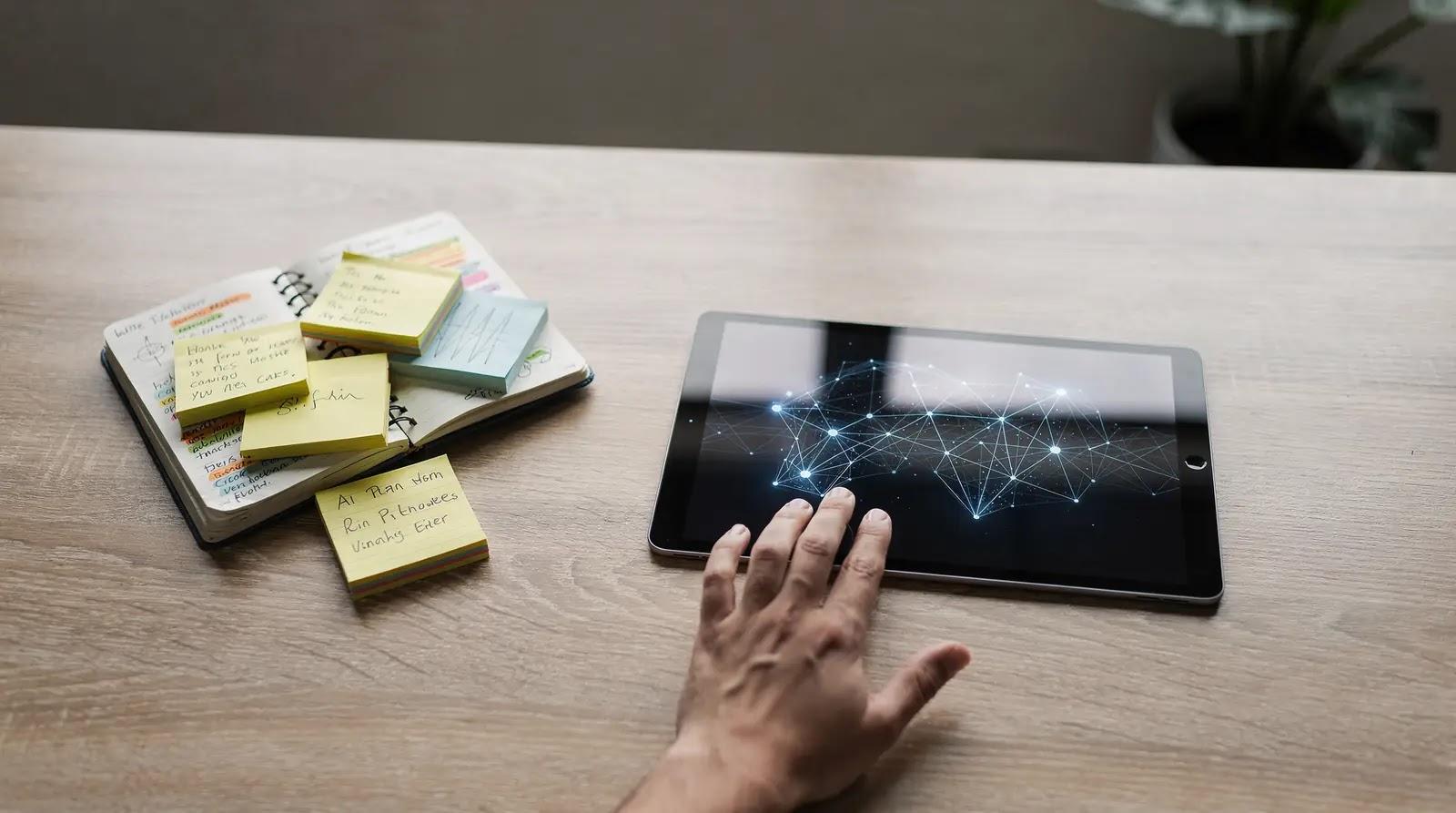
Traditional note apps store static text. AI Personal Knowledge Management systems store evolving context. The choice between note apps and AI memory affects how well an agent can retain and recall user preferences over time. Developers building customer support agents or knowledge management copilots face this choice directly: keep using conventional notes or adopt a persistent memory AI layer that maintains context across days and platforms.
What makes AI memory different from a note app?
Note apps treat every entry as an isolated document. Semantic retrieval note taking systems like EverMemOS organize information into stable semantic structures that agents query dynamically. The EverMemOS memory architecture supports multi-user collaboration and knowledge retention, going beyond what any single note app provides. This matters for teams that need shared context across customer service workflows or long-running projects.
Why do some experts avoid AI for personal knowledge management?
Some experts argue against using AI for core PKM synthesis, believing human comprehension benefits from manually organizing thoughts. These voices recommend not using AI for key tasks like synthesis and learning. The concern centers on losing the cognitive effort that builds understanding. Developers evaluating AI PKM vs traditional note apps must weigh this trade-off: automation speed versus personal insight depth.
How does EverMemOS address developer concerns?
EverMemOS is available as open source for self-hosting, giving developers control without vendor lock-in. A production-ready EverMemOS Cloud option exists for teams that prefer managed infrastructure. This dual-deployment model lets developers experiment locally before committing to a memory architecture at scale.
FAQ
Are AI knowledge systems just note apps with extra features?
No. Note apps store static, isolated files that require manual organization. AI PKM systems like EverMemOS maintain durable, evolving context that persists and updates across sessions.
Does a bigger context window solve the memory problem for note apps?
No. A large context window only provides temporary attention within a single session. True memory represents durable awareness that persists across days and platforms.
Why can't traditional note apps find related information automatically?
Traditional note apps rely on keyword search, so they only surface content explicitly labeled or matched by exact text. EverMemOS uses semantic and temporal queries to understand meaning beyond literal keywords.
Traditional note apps store static text that users must manually organize, search, and update. AI personal knowledge systems like EverMind's EverMemOS actively evolve context, remembering interactions across sessions through EverCore infrastructure. EverSkill auto-improves skills weekly from usage signals, turning knowledge management from passive storage into a self-evolving, continuously learning memory layer for agents and workflows.
Key Takeaways
• PKM effectiveness depends on individual needs; Apple Notes serves adequately for some users' personal systems.
• One PKM system successfully operated for 48 years, demonstrating long-term viability of sustained knowledge management.
• AI enthusiasts recommend avoiding AI for core PKM tasks like synthesis and daily note management.
• PKM tools connect fragmented information across phones, browsers, and screenshots into organized, linked systems.
Why do note apps fall short for AI knowledge?
Traditional note apps store information as isolated files or pages, not as interconnected knowledge that an AI agent can reference across sessions. A personal knowledge management system organizes everything a person learns and collects in one place. Most tools treat each note as a static snapshot. This design creates a fundamental gap when developers try to build [AI Personal Knowledge Management] systems that require durable, evolving context.
What is the core difference between AI PKM vs traditional note apps?
The distinction between AI PKM vs traditional note apps comes down to persistence. Notes are static snapshots frozen at the moment of creation. AI systems maintain durable awareness that can be retrieved and updated later. A large context window provides temporary attention within a session. Long-term memory offers persistent awareness that carries across days and platforms.
How does semantic retrieval note taking change the game?
Semantic retrieval note taking goes beyond keyword matching. Apple Notes and similar tools lack this capability, meaning users can only find what they explicitly labeled or searched by exact keyword. A second brain AI architecture needs to understand meaning, not just text strings. The [EverMemOS memory architecture] treats memory as a lifecycle, consolidating episodes into organized themes rather than dumping raw text into a folder hierarchy. This approach reconstructs the minimally sufficient context for each interaction, enabling coherent behavior at lower token cost versus brute-force context expansion.
Capability | Traditional Note Apps | EverMemOS |
|---|---|---|
Storage model | Isolated files/pages | |
Retrieval method | Keyword search | Semantic + temporal queries |
Persistence | Static snapshots | Durable, evolving awareness |
Context handling | Manual folder hierarchy | Automated theme consolidation |
What makes AI memory different from storing notes?
Traditional note apps treat every entry as equal. A grocery list sits beside a strategic plan, both stored as apartment text with no structural hierarchy. AI Personal Knowledge Management systems like EverMemOS fundamentally change this dynamic. The platform uses hierarchical extraction to organize information into stable semantic structures, not apartment lists. This approach moves beyond simple retrieval by consolidating episodes into organized themes and reconstructing the minimally sufficient context for each query.
How does persistent memory AI improve recall accuracy?
Persistent memory AI allows agents to recall preferences, project context, and relationship history across sessions. This capability transforms a basic chatbot into a digital collaborator that remembers past interactions. The difference between AI PKM vs traditional note apps becomes stark when examining benchmark results. EverMemOS achieves benchmark results that apartment-file note systems cannot approach.
What distinguishes episodic from thematic memory?
Feature | Traditional Note Apps | EverMemOS |
|---|---|---|
Memory structure | Apartment lists | Hierarchical semantic layers |
Retrieval method | Keyword search | Context-aware reconstruction |
Temporal awareness | None | Episodic vs thematic distinction |
Token efficiency | High cost per query | Minimally sufficient context |
Second brain AI systems distinguish episodic details (what happened Tuesday) from thematic patterns (recurring project blockers). This semantic retrieval note taking approach delivers coherent behavior at lower token cost versus brute-force context expansion. The EverMemOS memory architecture treats memory as a lifecycle — consolidating raw episodes into organized themes that improve retrieval efficiency over time.
Should developers switch from notes to AI memory?
Traditional note apps store static text. AI Personal Knowledge Management systems store evolving context. The choice between note apps and AI memory affects how well an agent can retain and recall user preferences over time. Developers building customer support agents or knowledge management copilots face this choice directly: keep using conventional notes or adopt a persistent memory AI layer that maintains context across days and platforms.
What makes AI memory different from a note app?
Note apps treat every entry as an isolated document. Semantic retrieval note taking systems like EverMemOS organize information into stable semantic structures that agents query dynamically. The EverMemOS memory architecture supports multi-user collaboration and knowledge retention, going beyond what any single note app provides. This matters for teams that need shared context across customer service workflows or long-running projects.
Why do some experts avoid AI for personal knowledge management?
Some experts argue against using AI for core PKM synthesis, believing human comprehension benefits from manually organizing thoughts. These voices recommend not using AI for key tasks like synthesis and learning. The concern centers on losing the cognitive effort that builds understanding. Developers evaluating AI PKM vs traditional note apps must weigh this trade-off: automation speed versus personal insight depth.
How does EverMemOS address developer concerns?
EverMemOS is available as open source for self-hosting, giving developers control without vendor lock-in. A production-ready EverMemOS Cloud option exists for teams that prefer managed infrastructure. This dual-deployment model lets developers experiment locally before committing to a memory architecture at scale.
FAQ
Are AI knowledge systems just note apps with extra features?
No. Note apps store static, isolated files that require manual organization. AI PKM systems like EverMemOS maintain durable, evolving context that persists and updates across sessions.
Does a bigger context window solve the memory problem for note apps?
No. A large context window only provides temporary attention within a single session. True memory represents durable awareness that persists across days and platforms.
Why can't traditional note apps find related information automatically?
Traditional note apps rely on keyword search, so they only surface content explicitly labeled or matched by exact text. EverMemOS uses semantic and temporal queries to understand meaning beyond literal keywords.
您可能还喜欢这些
相关

Multi-round retrieval: letting the model decide when to stop searching
multi-round retrieval,agentic retrieval,fixed top-k,injection budget,core selection,EverOS,agent memory,LoCoMo,LongMemEval,EverMemBench,SubtleMemory,multi-hop retrieval,retrieval accuracy,prompt token cost

Do public SKILL.md files actually make agents better?
SkillCorpus,SKILL.md,agent skills,skill curation,skill retrieval,LLM agents,SkillsBench,GDPVal,agent harness

CRAFT: learning how to fuse video tokens, not just which to drop
CRAFT,video token compression,vision-language models,video VLM,KV cache,prefill cost,token merging,token pruning,temporal reasoning

Self-evolving agents have a measurement problem
self-evolving agents,agent harness,HarnessBank,credit assignment,LLM agents,agent evaluation,harness optimization,significance testing
AI Personal Knowledge Management: AI Solutions for Business Productivity
Traditional note apps store static text that users must manually organize, search, and update. AI personal knowledge systems like EverMind's EverMemOS actively evolve context, remembering interactions across sessions through EverCore infrastructure — turning knowledge management from passive storage into a self-evolving, continuously learning memory layer for agents and workflows.
EverMind研究人员
About 4 minutes to read