AI Companion With Memory That Actually Remembers You
Turn a stateless chat experience into a persistent AI companion with memory, identity continuity, and long-term personalization — powered by EverOS.
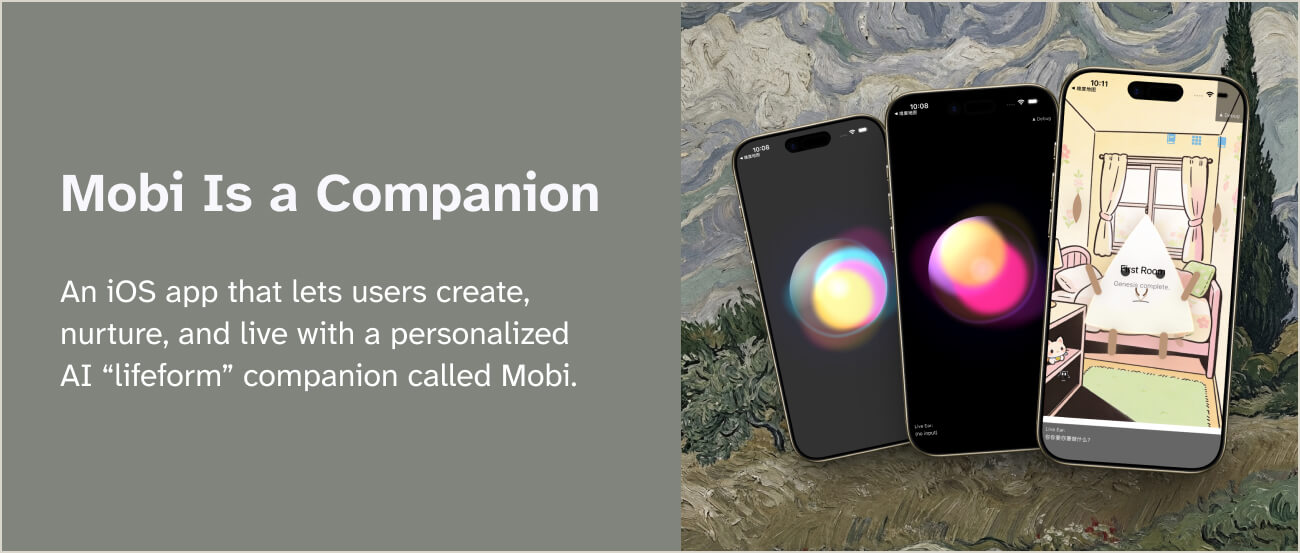
Why most AI companions break trust
Most companion products feel impressive for five minutes and forgettable by day five. A user shares preferences, routines, emotional context, then the assistant loses the thread in the next session — repetition, weak personalization, a fake sense of continuity.
An AI companion needs more than a bigger context window — it needs a durable memory layer. With Evermind, teams build companions that:
- Remember names, preferences, routines, and goals
- Preserve continuity across sessions and devices
- Distinguish recent changes from older memories
- Learn from repeated patterns
- Stay inspectable through Memory Bank
What an AI companion with memory should do
Three things a real memory companion needs to support at once.
Personal continuity
The assistant should remember who the user is, what matters to them, and what was discussed before.
Behavioral consistency
The companion should respond in a stable, context-aware way instead of resetting its tone and priorities every time.
Evolving relevance
The system should update memory as the relationship develops — not just keep dumping old notes into retrieval storage.
EverOS handles this through structured long-term memory instead of plain transcript stuffing. Memory is organized, retrievable, and adaptable over time.
How Evermind powers a companion with memory
A memory layer designed for long-horizon interactions — not single-session chat.
Persistent user memory
Store preferences, personal facts, routines, and recurring topics with time-aware memory retrieval.
Case-to-skill learning
EverOS captures repeated interaction patterns and distills them into reusable skills so the companion improves through usage.
Multimodal ingestion
Companions need more than text. EverOS ingests documents, screenshots, spreadsheets, URLs, and other data types through one API.
Transparent memory management
With Memory Bank, teams inspect user memory, group memory, and agent memory instead of guessing what the system retained.
Example workflows
Where durable memory makes a companion feel coherent instead of canned.
Daily life companion
A user mentions sleep issues, work stress, and upcoming travel over several weeks. The companion remembers those threads and gives advice that reflects the user's actual situation instead of generic prompts.
Coaching and accountability
The assistant remembers goals, prior commitments, blockers, and the user's preferred style of encouragement. Follow-ups become coherent instead of repetitive.
Relationship-driven support
For companionship, wellness, or roleplay use cases, memory improves emotional continuity — recurring themes, preferred boundaries, prior conversations, without forcing the user to restate them.
Companion with memory vs context-window-only chat
Why prompt stuffing isn't a substitute for a real memory layer.
| Context-only assistant | Evermind memory layer |
|---|---|
| Forgets between sessions | Remembers across sessions |
| Relies on prompt stuffing | Uses structured long-term memory |
| Weak personalization | Durable user-level continuity |
| Hard to inspect | Memory Bank supports visibility and edits |
| Static behavior | Learns from repeated interaction patterns |
Must-cover buying points for teams
If you're evaluating infrastructure for a virtual companion with memory, these are the real questions.
- Can it preserve memory across long time spans?
- Can it separate current truth from stale information?
- Can it support privacy controls and editable memory?
- Can it handle multimodal context instead of text only?
- Can it scale beyond one-off chat sessions?
Evermind is built for those constraints — not just for demo conversations.
Frequently Asked Questions
How is AI companion memory different from a long context window?
A long context window keeps more text in view for one session. Memory stores and retrieves durable information across sessions and updates it over time.
Can an AI companion with memory remember emotional context?
Yes — if the system stores structured signals such as preferences, recurring concerns, and relevant relationship history instead of relying only on raw chat logs.
Does memory make roleplay or companionship products better?
Usually yes. Memory improves continuity, reduces repetition, and helps the assistant respond in a way that feels grounded in prior interactions.
Can users inspect or edit what the AI remembers?
With Evermind's Memory Bank, teams can build more transparent memory management workflows instead of hiding memory state.
A companion that grows with every interaction
Build an AI companion with memory that grows with every interaction instead of starting from zero every time. Evermind gives your product the long-term memory layer needed for real continuity.