Personal AI with Memory: Enhancing AI Memory Management and Knowledge Retention
Personal AI with Memory: Enhancing AI Memory Management and Knowledge Retention
Readers will learn about the different types of memory architectures that support effective knowledge retention, the role of memory-augmented neural networks, and how Evermind AI's EverOS facilitates persistent memory in AI agents.
EverMind researchers
About 3 minutes to read

Long-term memory in AI agents is a pivotal aspect that significantly enhances their functionality and decision-making capabilities. This article delves into the mechanisms of long-term memory, its importance for AI agents, and how it can improve knowledge retention. As AI technology evolves, the ability to retain and recall information over extended periods becomes crucial for applications ranging from personal assistants to complex decision-making systems. Readers will learn about the different types of memory architectures that support effective knowledge retention, the role of memory-augmented neural networks, and how Evermind AI's EverOS facilitates persistent memory in AI agents. Additionally, we will explore best practices for implementing AI memory solutions to optimize performance.
What is Long-Term Memory in AI Agents and Why Does It Matter?
Long-term memory in AI agents refers to the capability of these systems to store and retrieve information over extended periods, which is essential for learning and adaptation. This memory type allows AI agents to build upon past experiences, improving their decision-making processes and overall effectiveness. The significance of long-term memory lies in its ability to enhance the contextual understanding of AI agents, enabling them to make informed decisions based on historical data. This capability is particularly beneficial in dynamic environments where timely and accurate responses are critical.
Further research highlights innovative approaches to address the limitations of current AI memory systems, proposing comprehensive frameworks for efficient memory management.
Defining Persistent Memory and Contextual Memory for AI
Persistent memory refers to the ability of AI systems to retain information beyond immediate tasks, allowing for long-term learning and adaptation. In contrast, contextual memory involves the storage of information relevant to specific situations, enabling AI agents to respond appropriately based on past interactions. For instance, a virtual assistant with persistent memory can recall user preferences over time, while contextual memory allows it to provide relevant suggestions during a conversation. Understanding these distinctions is crucial for developing AI systems that can effectively manage and utilize memory.
How Long-Term Memory Improves AI Agent Decision-Making
The integration of long-term memory into AI agents significantly enhances their decision-making capabilities. By retaining historical data, AI systems can analyze patterns and trends, leading to more informed choices. For example, in financial advisory applications, an AI agent equipped with long-term memory can track market changes and user investment preferences, providing tailored advice that evolves with the user's needs. This adaptability not only improves user satisfaction but also increases the overall effectiveness of AI solutions in various sectors.
Which Memory Architectures Support Effective AI Agent Knowledge Retention?
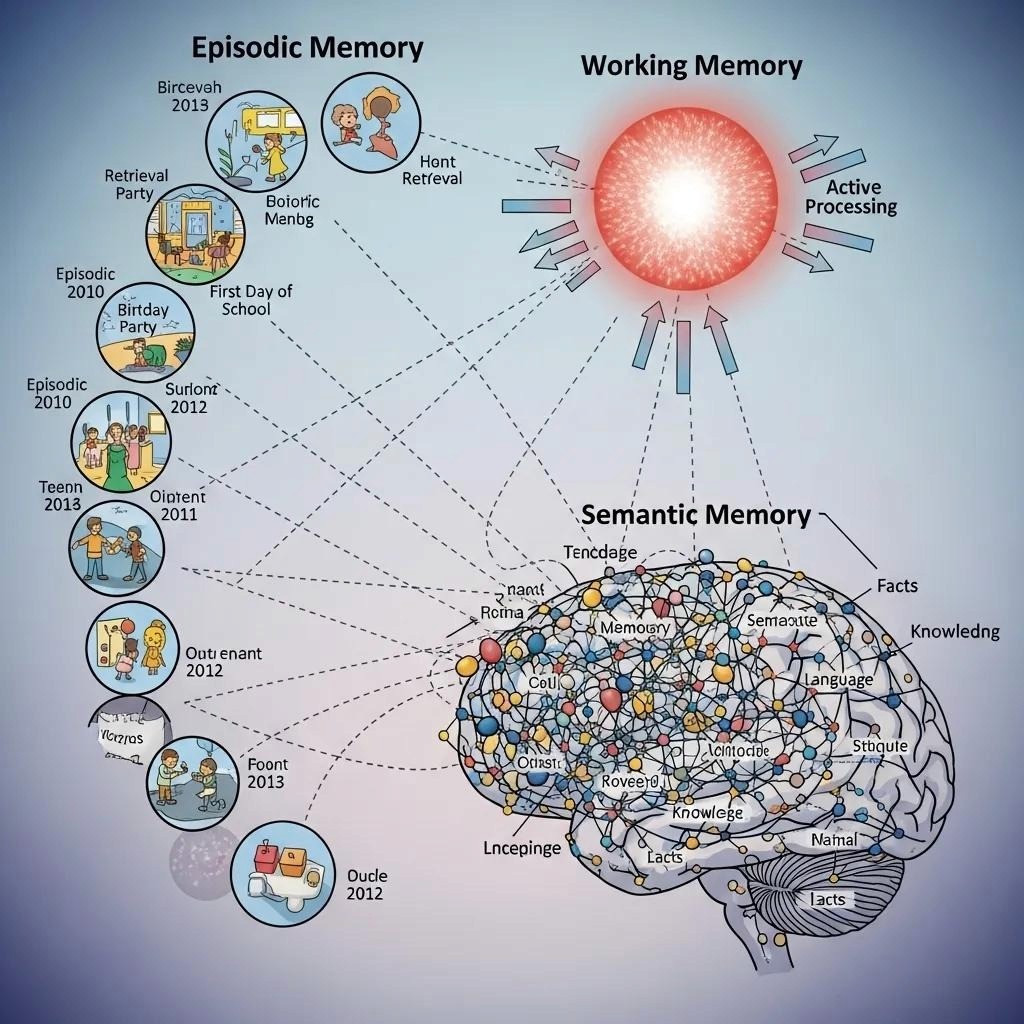
Different memory architectures play a vital role in supporting effective knowledge retention in AI agents. These architectures determine how information is stored, retrieved, and utilized, impacting the overall performance of AI systems.
Exploring Episodic, Semantic, and Working Memory Models
Episodic memory allows AI agents to recall specific events or experiences, enhancing their ability to learn from past interactions. Semantic memory, on the other hand, involves the storage of general knowledge and facts, enabling AI systems to understand and process information contextually. Working memory serves as a temporary storage system, holding information for immediate tasks. Each of these memory types contributes uniquely to the overall functionality of AI agents, allowing for a more nuanced understanding of data and improved decision-making.
What Are Memory-Augmented Neural Networks and Their Role?
Memory-augmented neural networks (MANNs) are a class of AI architectures designed to enhance the memory capabilities of traditional neural networks. By integrating external memory components, MANNs can store and retrieve information more efficiently, allowing AI agents to learn from a broader range of experiences. This architecture is particularly beneficial for tasks that require long-term knowledge retention, such as language processing and complex problem-solving. The use of MANNs represents a significant advancement in AI memory management, enabling agents to operate with greater flexibility and intelligence.
Specifically, the ability of these networks to facilitate rapid learning and knowledge assimilation is a key area of ongoing research.
Further advancements in MANN design focus on overcoming architectural bottlenecks to achieve more robust and efficient memory access.
How Does EverOS Enable Persistent Memory in AI Agents?
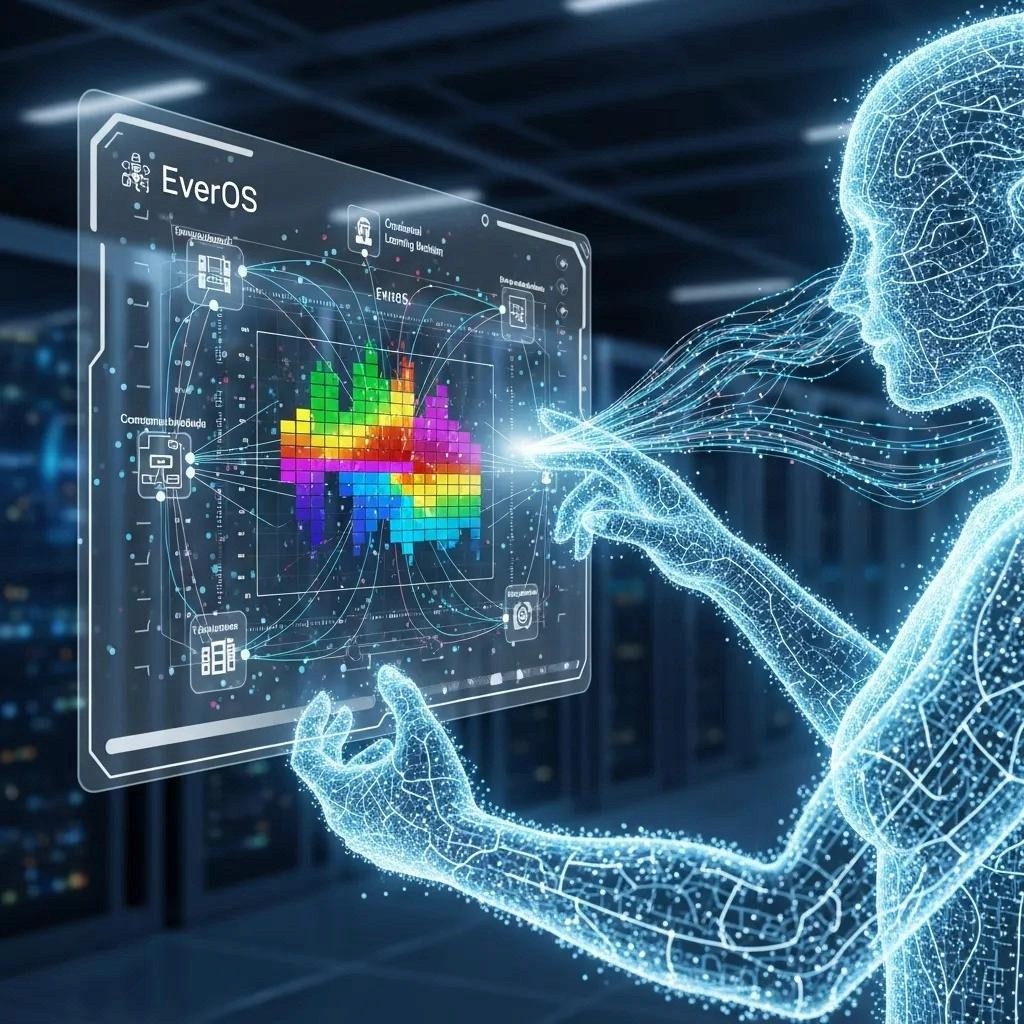
EverOS, developed by Evermind AI, is a cutting-edge platform that facilitates persistent memory in AI agents. By leveraging advanced memory architectures, EverOS enhances the ability of AI systems to retain and utilize information effectively.
Key Features of EverOS AI Memory Management Platform
EverOS offers several key features that support memory management in AI agents:
Dynamic Memory Allocation: This feature allows AI agents to allocate memory resources based on current tasks, optimizing performance and efficiency.
Contextual Learning: EverOS enables agents to learn from past interactions, improving their ability to provide relevant responses and recommendations.
Scalability: The platform is designed to scale with the needs of businesses, accommodating growing data and user interactions seamlessly.
These features collectively enhance the memory capabilities of AI agents, making them more effective in various applications.
Use Cases: Financial Advisory and Business Productivity Enhancements
In the financial sector, EverOS can significantly improve advisory services by enabling AI agents to track user preferences and market trends over time. This capability allows for personalized investment strategies that adapt to changing market conditions. Additionally, in business productivity applications, EverOS enhances task management by allowing AI agents to remember user preferences and project details, streamlining workflows and improving overall efficiency.
What Are Best Practices for Implementing AI Agent Memory Solutions?
Implementing effective memory solutions for AI agents requires careful consideration of various strategies to ensure optimal performance and user satisfaction.
Strategies for Integrating Contextual and Cognitive Architectures
To successfully integrate contextual and cognitive architectures, organizations should focus on the following strategies:
Define Clear Objectives: Establish specific goals for memory implementation, such as improving user engagement or enhancing decision-making capabilities.
Utilize Hybrid Models: Combine different memory architectures to leverage their strengths, ensuring a more comprehensive approach to knowledge retention.
Regularly Update Memory Systems: Continuously monitor and update memory systems to reflect changes in user behavior and preferences, maintaining relevance and accuracy.
These strategies can help organizations maximize the benefits of AI memory solutions.
Monitoring and Updating AI Memory Systems for Optimal Performance
Regular monitoring and updating of AI memory systems are crucial for maintaining optimal performance. Organizations should implement feedback mechanisms to assess the effectiveness of memory solutions and make necessary adjustments. This proactive approach ensures that AI agents remain responsive to user needs and can adapt to evolving contexts, ultimately enhancing their overall effectiveness.
To explore more about the company's mission, visit Evermind AI's mission page.
Long-term memory in AI agents is a pivotal aspect that significantly enhances their functionality and decision-making capabilities. This article delves into the mechanisms of long-term memory, its importance for AI agents, and how it can improve knowledge retention. As AI technology evolves, the ability to retain and recall information over extended periods becomes crucial for applications ranging from personal assistants to complex decision-making systems. Readers will learn about the different types of memory architectures that support effective knowledge retention, the role of memory-augmented neural networks, and how Evermind AI's EverOS facilitates persistent memory in AI agents. Additionally, we will explore best practices for implementing AI memory solutions to optimize performance.
What is Long-Term Memory in AI Agents and Why Does It Matter?
Long-term memory in AI agents refers to the capability of these systems to store and retrieve information over extended periods, which is essential for learning and adaptation. This memory type allows AI agents to build upon past experiences, improving their decision-making processes and overall effectiveness. The significance of long-term memory lies in its ability to enhance the contextual understanding of AI agents, enabling them to make informed decisions based on historical data. This capability is particularly beneficial in dynamic environments where timely and accurate responses are critical.
Further research highlights innovative approaches to address the limitations of current AI memory systems, proposing comprehensive frameworks for efficient memory management.
Defining Persistent Memory and Contextual Memory for AI
Persistent memory refers to the ability of AI systems to retain information beyond immediate tasks, allowing for long-term learning and adaptation. In contrast, contextual memory involves the storage of information relevant to specific situations, enabling AI agents to respond appropriately based on past interactions. For instance, a virtual assistant with persistent memory can recall user preferences over time, while contextual memory allows it to provide relevant suggestions during a conversation. Understanding these distinctions is crucial for developing AI systems that can effectively manage and utilize memory.
How Long-Term Memory Improves AI Agent Decision-Making
The integration of long-term memory into AI agents significantly enhances their decision-making capabilities. By retaining historical data, AI systems can analyze patterns and trends, leading to more informed choices. For example, in financial advisory applications, an AI agent equipped with long-term memory can track market changes and user investment preferences, providing tailored advice that evolves with the user's needs. This adaptability not only improves user satisfaction but also increases the overall effectiveness of AI solutions in various sectors.
Which Memory Architectures Support Effective AI Agent Knowledge Retention?
Different memory architectures play a vital role in supporting effective knowledge retention in AI agents. These architectures determine how information is stored, retrieved, and utilized, impacting the overall performance of AI systems.
Exploring Episodic, Semantic, and Working Memory Models
Episodic memory allows AI agents to recall specific events or experiences, enhancing their ability to learn from past interactions. Semantic memory, on the other hand, involves the storage of general knowledge and facts, enabling AI systems to understand and process information contextually. Working memory serves as a temporary storage system, holding information for immediate tasks. Each of these memory types contributes uniquely to the overall functionality of AI agents, allowing for a more nuanced understanding of data and improved decision-making.
What Are Memory-Augmented Neural Networks and Their Role?
Memory-augmented neural networks (MANNs) are a class of AI architectures designed to enhance the memory capabilities of traditional neural networks. By integrating external memory components, MANNs can store and retrieve information more efficiently, allowing AI agents to learn from a broader range of experiences. This architecture is particularly beneficial for tasks that require long-term knowledge retention, such as language processing and complex problem-solving. The use of MANNs represents a significant advancement in AI memory management, enabling agents to operate with greater flexibility and intelligence.
Specifically, the ability of these networks to facilitate rapid learning and knowledge assimilation is a key area of ongoing research.
Further advancements in MANN design focus on overcoming architectural bottlenecks to achieve more robust and efficient memory access.
How Does EverOS Enable Persistent Memory in AI Agents?
EverOS, developed by Evermind AI, is a cutting-edge platform that facilitates persistent memory in AI agents. By leveraging advanced memory architectures, EverOS enhances the ability of AI systems to retain and utilize information effectively.
Key Features of EverOS AI Memory Management Platform
EverOS offers several key features that support memory management in AI agents:
Dynamic Memory Allocation: This feature allows AI agents to allocate memory resources based on current tasks, optimizing performance and efficiency.
Contextual Learning: EverOS enables agents to learn from past interactions, improving their ability to provide relevant responses and recommendations.
Scalability: The platform is designed to scale with the needs of businesses, accommodating growing data and user interactions seamlessly.
These features collectively enhance the memory capabilities of AI agents, making them more effective in various applications.
Use Cases: Financial Advisory and Business Productivity Enhancements
In the financial sector, EverOS can significantly improve advisory services by enabling AI agents to track user preferences and market trends over time. This capability allows for personalized investment strategies that adapt to changing market conditions. Additionally, in business productivity applications, EverOS enhances task management by allowing AI agents to remember user preferences and project details, streamlining workflows and improving overall efficiency.
What Are Best Practices for Implementing AI Agent Memory Solutions?
Implementing effective memory solutions for AI agents requires careful consideration of various strategies to ensure optimal performance and user satisfaction.
Strategies for Integrating Contextual and Cognitive Architectures
To successfully integrate contextual and cognitive architectures, organizations should focus on the following strategies:
Define Clear Objectives: Establish specific goals for memory implementation, such as improving user engagement or enhancing decision-making capabilities.
Utilize Hybrid Models: Combine different memory architectures to leverage their strengths, ensuring a more comprehensive approach to knowledge retention.
Regularly Update Memory Systems: Continuously monitor and update memory systems to reflect changes in user behavior and preferences, maintaining relevance and accuracy.
These strategies can help organizations maximize the benefits of AI memory solutions.
Monitoring and Updating AI Memory Systems for Optimal Performance
Regular monitoring and updating of AI memory systems are crucial for maintaining optimal performance. Organizations should implement feedback mechanisms to assess the effectiveness of memory solutions and make necessary adjustments. This proactive approach ensures that AI agents remain responsive to user needs and can adapt to evolving contexts, ultimately enhancing their overall effectiveness.
To explore more about the company's mission, visit Evermind AI's mission page.
You may also like these
Related

Multi-round retrieval: letting the model decide when to stop searching
multi-round retrieval,agentic retrieval,fixed top-k,injection budget,core selection,EverOS,agent memory,LoCoMo,LongMemEval,EverMemBench,SubtleMemory,multi-hop retrieval,retrieval accuracy,prompt token cost

Do public SKILL.md files actually make agents better?
SkillCorpus,SKILL.md,agent skills,skill curation,skill retrieval,LLM agents,SkillsBench,GDPVal,agent harness

CRAFT: learning how to fuse video tokens, not just which to drop
CRAFT,video token compression,vision-language models,video VLM,KV cache,prefill cost,token merging,token pruning,temporal reasoning

Self-evolving agents have a measurement problem
self-evolving agents,agent harness,HarnessBank,credit assignment,LLM agents,agent evaluation,harness optimization,significance testing
Personal AI with Memory: Enhancing AI Memory Management and Knowledge Retention
Readers will learn about the different types of memory architectures that support effective knowledge retention, the role of memory-augmented neural networks, and how Evermind AI's EverOS facilitates persistent memory in AI agents.
EverMind researchers
About 3 minutes to read
EverMind
A straightforward solution to long-term coherence
Scan to join the community

Discord


© 2026 EverMind Team.
EverMind
A straightforward solution to long-term coherence
Scan to join the community
Discord
© 2026 EverMind Team.
EverMind
A straightforward solution to long-term coherence
Scan to join the community
Discord
© 2026 EverMind Team.